Sep 25, 2026
Hazem Elshreya, MD, FACOG, MSCP

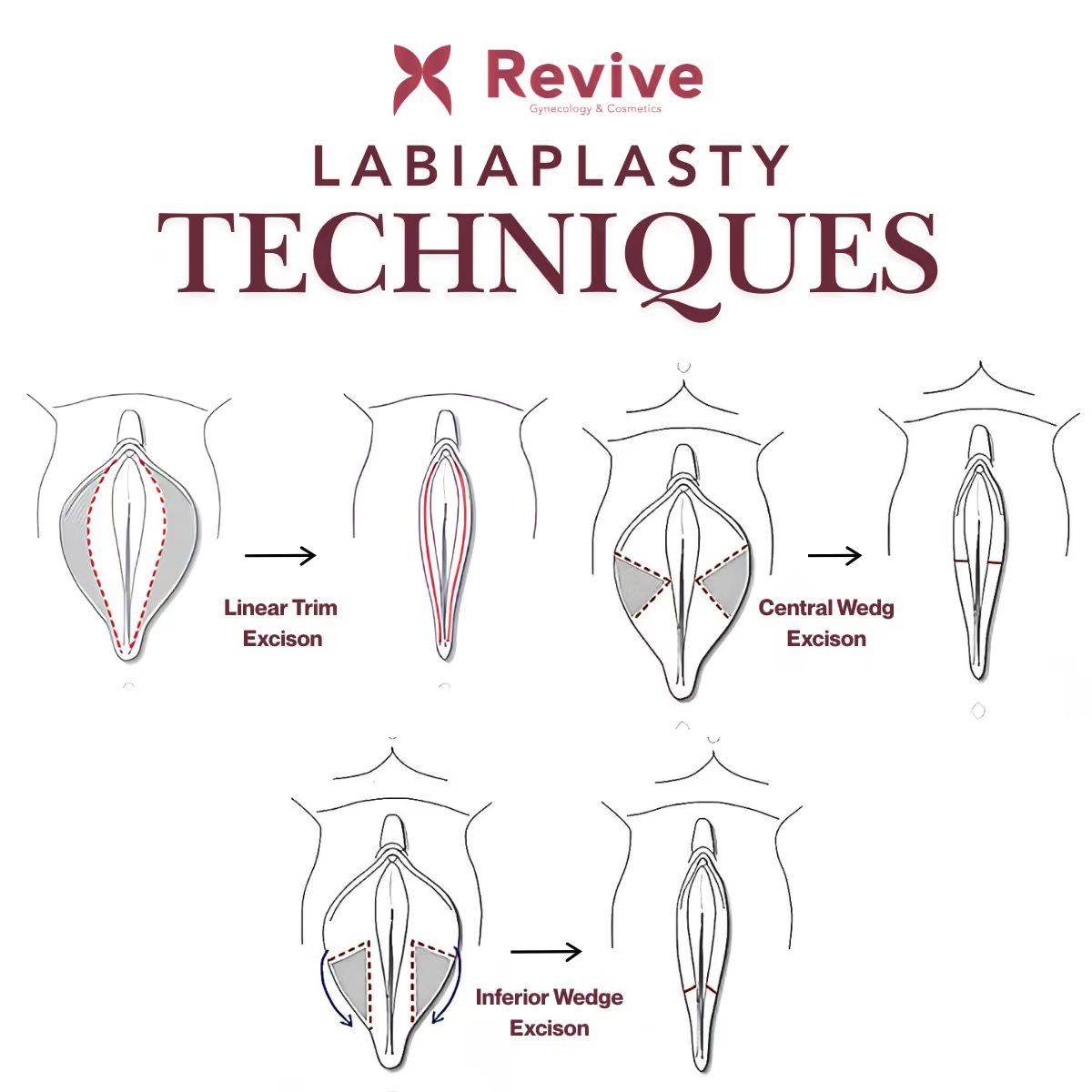
Labiaplasty is one of the most commonly performed cosmetic gynecology procedures and can help address discomfort, irritation, asymmetry, or self-consciousness related to enlarged or elongated labia minora. The two most common surgical techniques are the trim method and the wedge method.
Each approach has unique advantages, and the best option depends on your anatomy, goals, tissue characteristics, and surgeon experience.
At Revive Gynecology & Cosmetics in Marlton, NJ, Dr. Hazem Elshoreya performs personalized labiaplasty procedures tailored to each patient’s anatomy and aesthetic goals.
The trim technique involves removing excess tissue along the outer edge of the labia minora. The remaining edge is then carefully reshaped and sutured to create a smoother and smaller contour.
This is one of the most commonly performed and versatile labiaplasty techniques.
The wedge technique removes a V-shaped wedge of tissue from the thickest or most protruding portion of the labia while preserving the natural outer edge.
The remaining tissue is then closed together to reduce protrusion while maintaining a more natural border appearance.
FeatureTrim TechniqueWedge TechniqueRemoves outer edgeYesNoPreserves natural borderNoYesRemoves dark pigmentationYesUsually NoBest for large tissue excessYesSometimesRisk of dehiscenceLowerSlightly higherScar locationAlong edgeInternal central scarSymmetry correctionExcellentGood
There is no single “best” technique for every woman.
The ideal labiaplasty approach depends on:
In many cases, surgeons may even combine techniques or modify them based on the patient’s anatomy.